Wednesday, September 26, 2012

International Taxation of Unpaid and Underpaid Mail:
1976 Lausanne Handling Charge System

1976 Japan postage due handstamp (Amount Due + Handling Charge)

(Readers unfamiliar with international postage due taxation should refer to THIS ARTICLE)

The Vienna system of taxing unpaid or underpaid international mail, in place since 1966, was revised at the 17th Universal Postal Union Conference held in 1974 at  Lausanne, Switzerland. The taxation change came into effect on January 1, 1976.

This post begins with a review of the Vienna System then explains the Lausanne system showing examples of taxed international mail from Canada. The scarcity of post-1976  Canadian taxed international mail is also discussed

The Vienna System

The Vienna system required the county of origin to mark the letter  with a T stamp along with a fraction in which the numerator was DOUBLE the amount of the underpayment and the denominator was the country of origin's international letter rate. The country of delivery would then multiply the tax fraction by its international letter rate to calculate the charge.

Example:

Milan, Italy to Toronto, October 28, 1967

Italian international letter rate : 90L
Prepaid: 50L
Underpaid: 40L
Double deficiency : 80L

Italian Tax Fraction:


Double deficiency/UPU letter rate = 80/90

Canadian charge:


Lauzanne Handling Charge System ( From January 1, 1976)

The country of origin's T fraction was changed to SINGLE the amount of the underpayment over the country of origin's international letter rate. The country of delivery still multiplied the fraction by its international letter rate but added a HANDLING CHARGE of 60 gold centimes* at most or the charges prescribed by internal legislation. [Article 21 (f) UPU Regulations]

*To put this amount in perspective, the UPU basic letter rate was 50 gold centimes. [The 1989 Washington UPU Congress abolished the gold franc and replaced it with Special Drawing Rights (SDR),the International Monetary Fund accounting unit.].


Lausanne Handling Charge Formula:


Canada's Implementation of the Lausanne Handling Charge System


In 1976 (presumably January 1), Canada Post Office began to tax outbound mail single the amount of deficiency. However incoming deficient mail continued to be charged according to the Vienna system, i.e. double deficiency without handling charge. The author does not know if or when Canada began using the Handling Charge System for inbound mail.

(1) To Great Britain (20 Cent International Letter Period)


Bridgewater to Birmingham, February 24, 1976
20 cents letter rate (Shortpaid 4 cents)
Canadian Tax Fraction : 4/20
British Charge : 13p

Canada Tax Fraction


Great Britain Charge


(2)  To Germany (25 Cent International Letter Period)

The international printed matter rate was 12 cents for the first ounce, effective January 1, 1977.

 Nanisivik, N.W.T., to Munster, Germany, February 14, 1977
12 cents international printed matter rate (other articles)
Shortpaid 2 cents


Canada Tax Fraction

2 cents single deficiency/ 25 cents international letter rate

Germany Charge

55 Pfennig due


The author does not know how the German post office arrived at this amount.

 (3) To Denmark (35 Cent International Letter Period)


Guelph to Ringsted, Denmark, May 27, 1979
35 cents post card rate (same as international letter rate)
Shortpaid 13 cents


Canada Tax Fraction


13 cents single deficiency/ 35 cents international letter rate

Denmark Charge

160 øre due


The author does not know how the Danish post office arrived at this amount.

(4) To Germany (35 cents International Letter Period)


Kemptville to Bayreuth, West Germany, August 12, 1981

35 cents letter rate
Shortpaid 18 cents


Canada  Tax Fraction


18 cents single deficiency/ 35 cents international letter rate

Germany Charge

97 Pfennig due

 The author does not know how the German post office arrived at this amount.

(5) To Sweden (64 cents International Letter Period)


Calgary to Stockholm, January 26, 1983
64 cents letter rate
Shortpaid 4 cents

 Canada Tax Fraction

4 cents single deficiency/ 64 cents international letter rate


 Sweden Charge


165 øre due

The Swedish international letter rate from June 1/81 to May 31/83 was 240 øre   , and there was a handling fee of 150 øre.

Swedish Charge = 04/64 x 240 øre  (postage due) + 150 øre  (handling charge) = 165 øre

(6) To Austria (64 cents period)


Didsbury, Alberta to Salzburg, Austria, January 28, 1983
64 cents letter rate
Shortpaid 4 cents


Canada Tax Fraction


4 cents single deficiency/ 64 cents international letter rate

Austria Charge

2.50 Schillings due


The author does not know how the Austrian post office arrived at this amount.

 A Collecting Challenge


Taxed international mail from Canada during the post-1976 period is difficult to find. Generally, instead of taxing mail with return addresses, the Post Office either returned the mail to the sender for additional postage or advanced the deficient postage.

Advanced Postage


Lauzon, P.Q. (G1K 3W0 LPP) to Magenad, Lesotho, January 16, 1982
60 cents letter rate


The "A" stamps (30 cents denomination) were not valid for overseas
use.
 
The "Canada Postage Paid" handstamp indicates that the Post 
Office advance the postage and sent a card to the sender requesting
payment of 60 cents, single deficiency.


Postage Due Notice Card


Postage Due Notice card advising sender of insufficiently paid mail that the deficient postage was advanced by the Post Office. A double weight (40g) letter to Stockholm, Sweden was shortpaid 33 cents. The following information and instructions are provided:


Rather than delay the item or have the addressee pay the postage due, the necessary postage has been placed on it.
The amount due is shown in the shaded area (lower left hand corner). Please affix stamps on the reverse side of this card and mail it.


33 cents in postage was affixed to the front of the card paying the postage due (single deficiency). Postmarked Carleton Place, November -,1982


Japan Handling Charge 


The above domestic U.S. cover was sent from Garden City, Michigan, to Cuyahoga Falls, Ohio, November 1976. The addressee had advised the post office that he had moved to Japan and requested mail forwarding. The U.S.post office affixed a yellow redirection label.


Redirected Mail Taxation

Under the previous Vienna system, underpaid mail was taxed at double the deficiency, while redirected mail was taxed at single the difference between the original rate and the rate to the new destination. With the introduction of the Lausanne system, underpaid and redirected mail were both taxed at single the deficiency.

Since the surface letter rate to Japan (18 cents) was greater than the domestic surface letter rate, the letter was taxed. The difference in rates, 5 cents, is the numerator of the tax fraction, and the international letter rate, 18 cents, is the denominator of the tax fraction.


Japan Charge

The Japanese post office handstamp explains how 95 yen, the amount charged, was calculated:


Postage Due : 25 yen
Handling Charge: 70 yen
I do not know how the Japanese post office calculated the 25 yen charge. Assuming an international letter rate of 50 yen (to be confirmed), then 25 yen is double the amount due. This is incorrect since redirected mail was to be charged at single the deficiency. However, it may be that 25 yen was the minimum postage due charge.

Refused and Returned


Since the addressee refused to pay the Japanese charge, the letter was returned to the sender. There is no indication that the sender was charged by the U.S. post office.

Tuesday, September 25, 2012

The Husky Tower :
Calgary Celebrates Canada's Centennial


 circa 1968


Calgary Tower 2014

The Husky Tower (now the Calgary Tower) was constructed as a joint venture between Marathon Realty and Husky Oil. The Tower was built to honour Canada’s centennial and was also intended to promote the downtown core as a part of a Calgary urban renewal program.


 Construction of the 626 foot Tower commenced on February 19, 1967 and was completed in June 1968 at a total cost of $3.5 million dollars. The Tower officially opened to the public on June 30, 1968.


Opening Day Souvenir Cover

Calgary, June 30, 1968 Embossed cachet 

The embossed cachet  is a stylized representation of the top of the Tower.


Husky Tower Handstamp

Mail deposited at the top of the Tower received a souvenir handstamp.


1968


July (August?) 28, 1968


1970

Calgary, February 6, 1970

POSTED FROM TOP OF HUSKY TOWER CALGARY, ALBERTA


The Tower Inn

 The Tower Inn, located one floor above street level in the Husky Tower, featured Olde English decor by John Rogers [London] Ltd. 


On November 1, 1971, the Husky Tower was officially renamed the Calgary Tower as a tribute to the citizens of Calgary.


Source


Monday, September 24, 2012


Change of Address Announcement Cards
Centennial Period (1967-1973)


The "Postage Free"  Change of Address Announcement Card was introduced  by Canada Post Office in 1961.Change of Address Announcement Cards available for use during the Centennial period (1967-73) are shown in this post.

1. 1964 Card: 86B-(8/64)

"Postage Free" to Canada, the United States and Mexico

Front Side


 Gibbons, B.C. to Cloverdale, March 19, 1968

Reverse Side


 Printing Order Number


Postage Information

Address cards could be sent postage free to Canada, the United states and Mexico. The rate to other countries was 3 cents (printed matter rate)


2. 1966 Card : 33-86-037 (8-68)

a) Mailed to Canadian Address

Front Side


Galt, Ontario to Westt Bank, B.C., April 8, 1968


Reverse Side


Printing Order Number


Postage Paid


 b) Mailed to US Address


 Pointe-Claire-Dorval to Roosevelt, N.J., June 17, 1968


3. 1968 Card : 33-86-037 (6-68)

Front Side


New Westminster to Cloverdale, January 31, 1969


Reverse Side


Printing Order Number


Postage Paid


4. 1969 Card : 33-86-037 (3-69)


a) Mailed to Canadian Address


Front Side


Powell River to Vancouver, July 31, 1970


Reverse Side


Printing Order Number


b) Mailed to Europe via Air Mail

 
Rexdale to Delft, Netherlands, October 30, 1969
10 cents international air mail post card rate


Difference Between the 1968 and 1969 Cards

There is one minor difference between the "Subscription No." boxes of the 1968 and 1969 cards. 

 1968 Card

Account, Subscription No., etc.


 1969 Card


Reference, Subscription No., etc.


5. 1972 Card : 33-86-037 (5-72)

Mailed to England

Front Side


Reverse Side


Printing Order Number


Sunday, September 23, 2012

The Canadian Contingent: South African War


Oval Canadian Army Post Office cachet


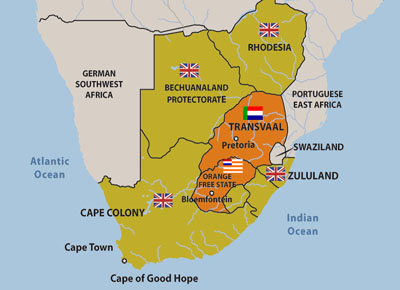
The South African War, also know as the Boer War, was fought from 1899 to 1902 between Great Britain and  the South African Republic (Transvaal) and the Orange Free State, two independent republics in South Africa. The republics, founded by Boers, descendants of Dutch immigrants who had first settled in the area, were rich in diamond and gold deposits.

Boer War Maps : Map of Southern Africa showing the British colonies and the Boer republics - 2.a.2.1 cgr5


Initially, the Boers inflicted heavy losses on the British, but by September 1900, they had been defeated in several key engagements. Refusing to surrender, the Boers launched a protracted guerilla war against the British forces.The British, under the leadership of Lord Kitchener. responded with a scorched earth policy of destroying Boer farms and moving civilians into concentration camps, where thousands died from disease. Boer forces finally surrendered in May, 1902. Both republics were annexed by the British Empire which became incorporated into the Union of South Africa in 1910.


Canadian Participation

While many English-Canadians supported Britain's cause in South Africa, most French-Canadians and many recent immigrants from countries other than Britain were opposed to Canadian involvement. However, pressured by Pro-Empire Canadians, Prime Minister Sir Wilfrid Laurier agreed to send volunteers to South Africa. Over the three years of the war, more than 7,000 Canadians, including 12 women nurses, served overseas. Of the Canadians who served in South Africa, 267 were killed.

Canadian contingent in Quebec City, 1899 before departure

Sources:
Canadian War Museum
Wikipedia


 Mail from the Canadian Contingent South Africa

Postal services provided to Canadian troops in South Africa are described at pages 7 and 8 of L. Dawson`s excellent 1992 treatise, A History of the Canadian Forces Postal Services.

The covers shown below were mailed by George Hulme to Lieutenant Colonel Ponton of the 15th  Argyll Light Infantry, Belleville. Hulme was wounded at the Battle of Paardeberg in February 1900. 


 YMCA Stationery

"Active Service" RCR (Royal Canadian Contingent) in blue pencil under flags
British Army Field Post Office circular date stamp, September 20, 1900
London Transit October 20, 1900

 Canadian Contingent Oval Cachet

 British Army P.O. 55 handstamp, October 27, 1900
Canadian Contingent South Africa cachet November 7, 1900
Montreal transit December 8, 1900


Toronto South African War Memorial


 Toronto`s South African War Memorial was unveiled in 1908:


File:1908 Toronto SouthAfrican War Memorial QueenSt.jpg

Sunday, September 16, 2012

Medical Innovators
Dr. Hans Selye

On January 17, 2000,  Canada Post issued a stamp for its "Millenniun Collection" honoring Vienna-born endocrinologist Hans Selye (1907-1982) whose scientific work at the Université de Montréal  greatly increased our understanding of the biological factors causing stress and of how to control it.


The Canadian Institute of Stress , founded by Dr. Selye, provides this biography on its website:
Hans Selye is internationally acknowledged as "the father of the stress field" and, as such, a Canadian resource to the world. Since publishing the first scientific paper to identify and define "stress" in 1936, Dr. Selye wrote more than 1700 scholarly papers and 39 books on the subject. At the time of his death in late 1982, his work had been cited in more than 362,000 scientific papers, and in countless popular magazine stories, in most major languages and in all countries worldwide. He is still by far the world's most frequently cited author on stress topics. 

 Dr. Selye gained enduring international respect not only for his scientific innovations, but equally for his commitment to sharing the practical benefits of his work with everyday people. Two of his books, "The Stress of Life" and "Stress Without Distress" were unequalled bestsellers (the latter in 17 languages). His collaborative research with Dr. Richard Earle, resulted in his two final contributions "Stress and the Workplace" and "Your Vitality Quotient".

Selye Correspondence 1944

The postcard shown below, signed by Dr. Selye. is a request for a reprint of a scientific article written by Dr. R. Choisy in Rev. Med. de la Suisse Romande.

Montreal to Geneva Switzerland,  September 12, 1944


Friday, September 7, 2012


Toronto Postal Terminal "A" Fire
December 1974


A fire at Postal Terminal "A", Toronto, in December 1974 caused the damage to a cover containing the above group of Schering 1974 first day covers. The letter from Customer Service, Central Ontario Postal District, December 16, 1974,along with the charred FDCs make for an interesting example of delayed mail:


The enclosed item of mail was damaged by fire at Postal Terminal "A" Toronto, Ontario.

Please accept the sincere regrets of the Post Office Department for this unfortunate occurrence.

L. Etchell
Customer Service
Central Ontario Postal District


Unfortunately neither the original outer envelope nor the Post Office ambulance envelope is in the author's collection.